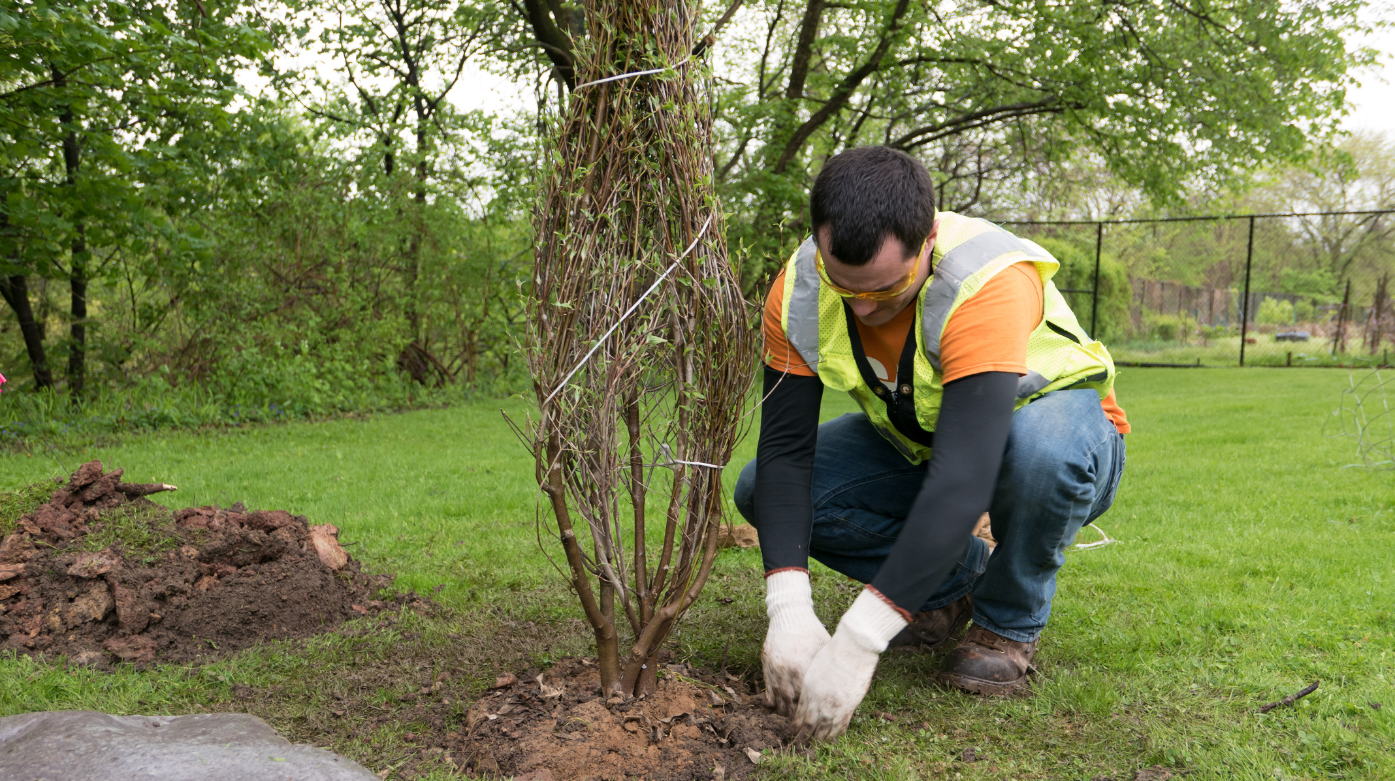
Planting trees this summer?
Remember to follow the "right tree, right place" approach
Did you know that falling vegetation is one of the leading causes of power outages across DLC’s service territory? That’s why proactive vegetation management remains a top priority in helping to prevent avoidable service disruptions and improve reliability for our customers.
So, what can you do to help? First, start by familiarizing yourself with the "right tree, right place" approach.
.png)
Right Tree, Right Place
As seen in the above diagram, it is important to keep three zones in mind when planting vegetation on your property. When fully grown, trees should be planted based on their height:
- Red zone: Suitable for trees up to 25 feet tall.
- Yellow zone: Acceptable for trees up to 40 feet tall.
- Green zone: Ideal for trees up to 60 feet tall.
Look Up — Not Just Down
As DLC continues its 2026 vegetation management program, it is just as important to look above where you’re planting as it is below.
“When planting on your property, always check for utility infrastructure within the space above, including poles and wires,” said Jereme Didier, DLC’s vegetation management specialist. “If there’s overhead equipment present, property owners should move the vegetation outside of the immediate zone to a more open, accessible space. It’s an easy step to overlook, but vital for community safety and service reliability.”
Utility-Safe Trees: Understanding the Difference
Knowing what kind of vegetation works best near utility infrastructure is just as important as being aware of utility-safe practices themselves. A tree deemed “utility safe” generally means that a tree’s mature height will not surpass the 25-foot red zone.
American sycamores, which are native to the Pittsburgh region and popular among locals, may start small — but at full maturity, they can soar up to 100 feet. While beautiful and ideal for other locations, you might want to consider a smaller option for your yard. A couple of great alternatives include a serviceberry tree, known for its edible berries, white flowers and wildlife benefits, or a dogwood tree, which is a popular choice among lawn foliage options.
Some other common utility-safe trees include varieties of cherry, maple and hawthorne.
When in doubt, research the species before you begin planting.
Tree Maintenance
Pruning, and occasionally removing, trees is often necessary to maintain a safe distance from utility poles and wires, no matter the species. Overgrown or improperly planted trees that interfere with overhead infrastructure may be pruned or removed by one of DLC’s contracted, qualified line clearance professionals.
If you’re planning to plant in or near our transmission line corridors, the distance between the tree and overhead power lines should significantly increase.
If you have questions about your plans, please contact us at 888-393-7100. You can also watch our recent appearance on "Pittsburgh Today Live" to learn more about the importance of planting the right tree in the right place.